
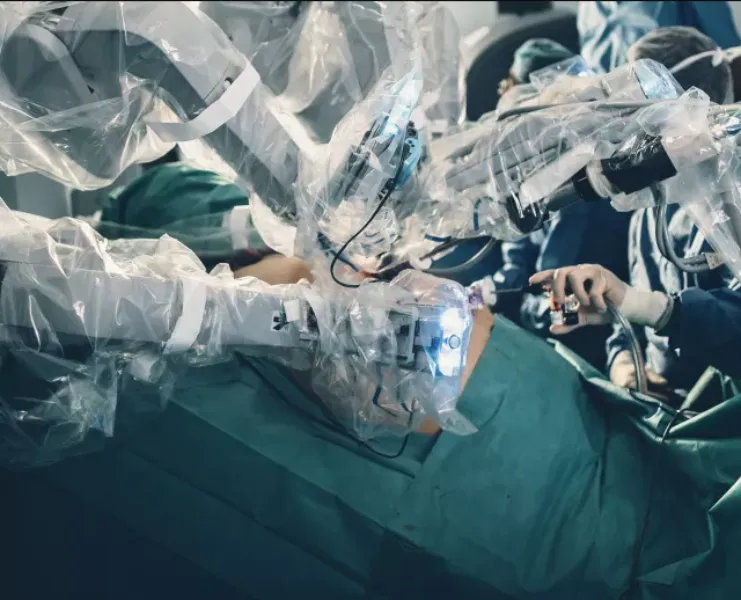
Robotic surgical systems have expanded the options available for performing selected minimally invasive cancer procedures. However, robotic cancer surgery is a surgical approach rather than a separate cancer treatment. The important question is not simply whether robotic technology is available, but whether it is appropriate for a particular tumour and patient.
For cancer patients considering advanced surgical options in Mumbai, Maharashtra, understanding how robotic surgery is selected can help create realistic expectations.
What Robotic Surgery Actually Means
During robotic surgery, the operation is performed by a trained surgeon using a robotic surgical platform. The system translates the surgeon's hand movements into controlled movements of surgical instruments inside the patient's body.
The robot does not independently decide what tissue to remove or perform the operation without the surgeon.
Its potential technical features can include magnified three-dimensional visualization, articulated instruments, and precise movement within confined anatomical spaces.
Which Cancer Operations May Use Robotic Techniques
Robotic approaches can be considered for selected procedures involving areas such as:
- Urological cancers
- Gynecological cancers
- Colorectal cancers
- Thoracic cancers
- Certain gastrointestinal cancers
- Selected head and neck procedures
Suitability varies according to tumour location, stage, anatomy, previous operations, the required extent of resection, and the surgeon's assessment.
Not every operation that can technically be performed robotically should necessarily be performed that way.
What Matters More Than the Technology
Cancer surgery has oncological objectives regardless of the operative platform.
The surgeon must still consider appropriate tumour removal, surgical margins where relevant, lymph node management, preservation of important structures when possible, and patient safety.
For this reason, patients should avoid choosing an operation solely because it is described as robotic, advanced, or minimally invasive.
The technology should support the surgical objective rather than define it.
Questions to Ask Before Choosing Robotic Surgery
A patient considering a robotic procedure can ask:
- Why is robotic surgery suitable for my cancer?
- What operation would be performed without the robotic platform?
- Does the robotic approach change the cancer operation itself?
- Could open surgery become necessary during the procedure?
- What are the relevant risks and limitations?
- What recovery can reasonably be expected?
- What additional cancer treatment may still be required?
These questions shift the discussion from technology alone to treatment quality and appropriateness.
When Another Approach May Be Better
Open or conventional minimally invasive surgery may be more appropriate in certain circumstances. Extensive disease, previous operations, tumour involvement of nearby structures, patient-specific factors, and the complexity of the required resection can all influence the decision.
Changing from a planned minimally invasive operation to an open procedure can also sometimes become necessary for safety or to complete the required cancer surgery.
At Cercano Surgical Oncology, patients in Mumbai can discuss whether robotic cancer surgery is relevant to their particular diagnosis as part of broader surgical planning.
The best surgical approach is ultimately the one that appropriately addresses the cancer while accounting for disease stage, anatomy, safety, expected recovery, and the overall treatment plan. Robotic technology can be valuable in selected cases, but careful patient selection remains more important than choosing an operation based on technology alone.
Keywords