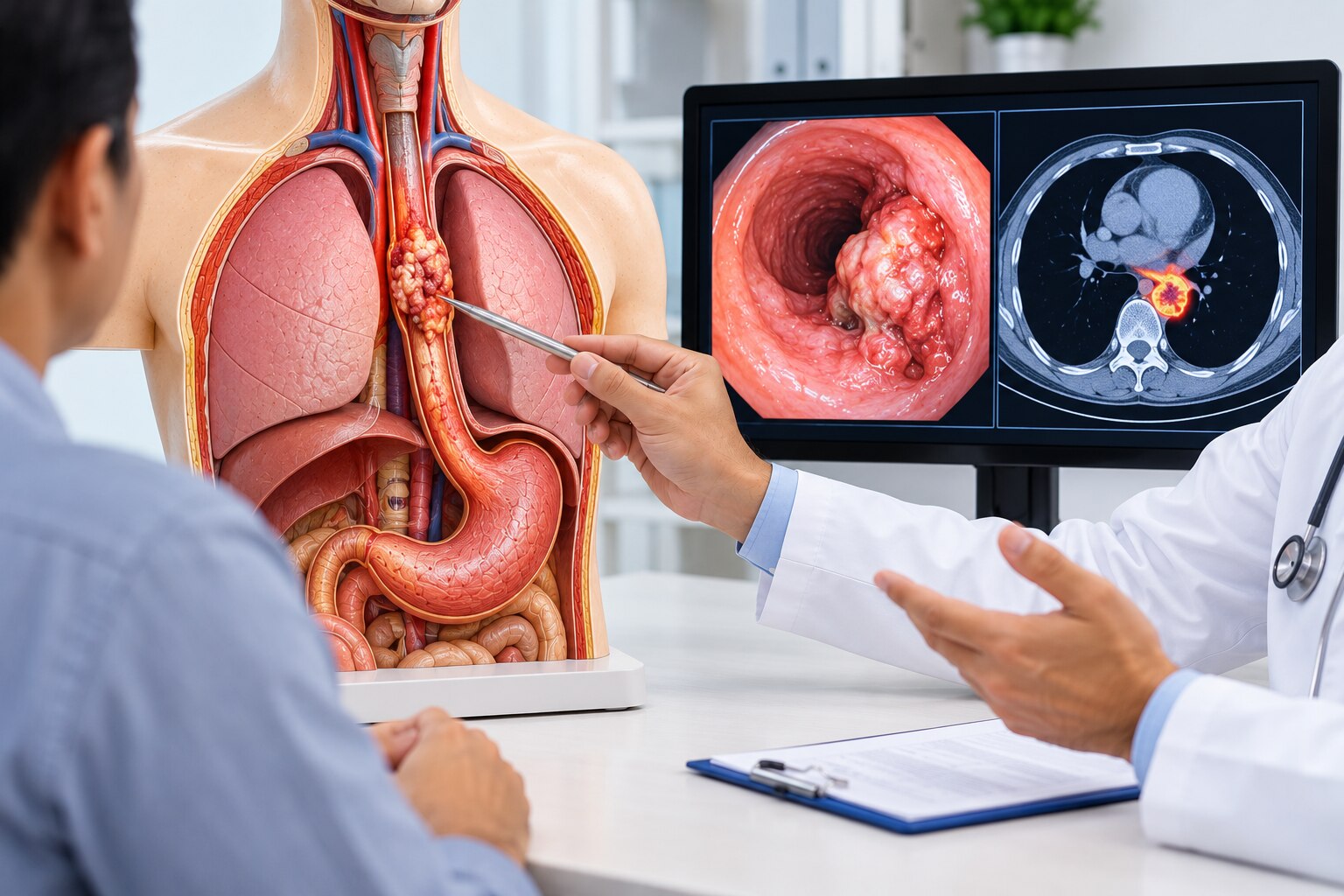
The right treatment depends on more than the presence of a tumor: doctors must match the pathology, stage, location, spread, and your ability to tolerate treatment. By the end, you will know which questions distinguish endoscopic treatment, surgery, chemoradiation, systemic therapy, and symptom-focused care before you choose a treatment plan.
Key takeaways
- Biopsy confirms whether the tumor is squamous-cell carcinoma or adenocarcinoma.
- CT, PET-CT, and endoscopic ultrasound help determine stage and operability.
- Small surface-confined tumors may qualify for endoscopic removal instead of surgery.
- Bring biopsy slides, scan discs, reports, medication lists, and prior treatment records.
How doctors establish the diagnosis and stage before choosing treatment
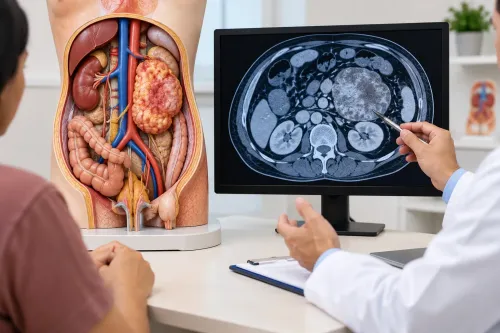
Treatment starts with tissue, not an operation. Upper gastrointestinal endoscopy locates the lesion and biopsy establishes histology: squamous-cell carcinoma or adenocarcinoma. Contrast CT of the chest and abdomen, PET-CT when indicated, and endoscopic ultrasound define local invasion and regional nodes. Bronchoscopy helps assess airway involvement for selected upper-esophageal tumors.
A multidisciplinary team then reviews resectability, tumor level, nearby structures, distant spread, nutrition, heart-lung fitness, and ability to tolerate combined treatment.
| Option | Findings that support it | What changes the decision |
|---|---|---|
| Endoscopic mucosal resection or submucosal dissection | Selected T1a cancer confined to the mucosa, without suspicious nodes | Deep invasion, lymphovascular invasion, poor-risk pathology, or involved margins may require surgery |
| Esophagectomy | Localized, resectable cancer, including selected deeper tumors | Distant spread, airway or major-vessel involvement, or poor fitness can make an operation unsuitable |
| Combined treatment | Locally advanced or node-positive resectable disease | Histology, tumor location, stage, nutrition, and fitness guide preoperative chemoradiotherapy or perioperative chemotherapy |
| Systemic therapy | Unresectable or metastatic cancer, or disease unsuitable for curative surgery | HER2, PD-L1 combined positive score, and mismatch-repair or microsatellite-instability results can change medicines |
At an esophageal cancer consultation in Mumbai, ask for a written diagnosis-and-stage summary, pathology review plan, treatment intent—curative or palliative—and alternatives with expected swallowing, eating, and recovery effects. Ask how inability to swallow liquids, dehydration, bleeding, chest pain, fever, or breathing difficulty will receive urgent care.
When an endoscopic procedure may replace an operation
Endoscopic treatment can replace esophagectomy only when cancer is confined to the inner lining and carries a low risk of lymph-node spread. The decision follows biopsy, careful endoscopic inspection, and staging rather than appearance alone.
- EMR suits a small, clearly defined superficial lesion that can be removed safely in one piece or in planned sections.
- ESD suits a larger, flat, scarred, or spreading lesion when the team needs one-piece removal and accurate measurement of invasion depth.
- Endoscopic treatment is appropriate when pathology shows no deep submucosal invasion, lymphovascular invasion, poor differentiation, involved margins, lymph-node disease, or distant metastasis.
The removed specimen must be examined. If it shows deeper invasion or other high-risk features, an apparently successful procedure may not have removed the cancer’s route to nearby lymph nodes. Further surgery or combined treatment may then be necessary.
Esophagectomy is usually required for cancer invading deeply into the submucosa or muscle, cancer with suspicious regional nodes, an endoscopically unresectable lesion, or a non-curative EMR or ESD result. Surgeons also consider the tumor’s level, relationship to nearby structures, fitness, and treatment intent.
A multidisciplinary team should compare these risks before you choose among esophageal cancer treatment options in Mumbai.
How stage, tumor location, and fitness shape surgery and combined treatment
Esophagectomy is used when a nonmetastatic, resectable tumour extends beyond the superficial lining and the patient can tolerate major surgery. The operation removes the tumour-bearing oesophagus and nearby lymph nodes, then usually pulls the stomach upward to create a food conduit.
Tumour level, airway or aortic involvement, lymph nodes, histology, nutrition, heart and lung function all affect the plan.
For locally advanced disease, surgery alone is not usually the complete treatment. A multidisciplinary team may recommend one of these pathways before resection:
Preoperative chemoradiotherapy, such as the CROSS approach, particularly for selected squamous-cell carcinomas and adenocarcinomas.
Perioperative chemotherapy, such as FLOT, with treatment before and after surgery for appropriate adenocarcinoma cases.
Direct surgery for selected earlier or biologically suitable tumours when added treatment offers little benefit or creates excessive risk.
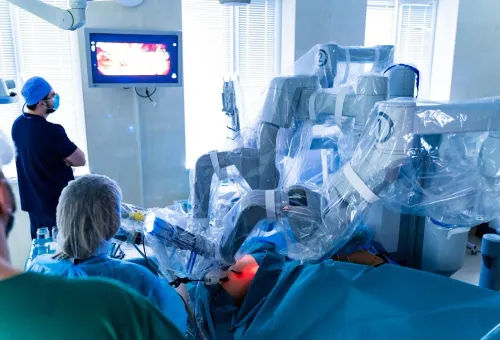
| Open | Laparoscopic or thoracoscopic | Robotic-assisted |
|---|---|---|
| Large chest or abdominal incisions | Small incisions using a camera | Small incisions with articulated instruments |
| More tissue disruption and slower recovery | Less wound pain and faster mobility | Similar minimally invasive benefits with greater instrument control |
| Useful when anatomy or tumour complexity demands it | Requires an experienced team and suitable anatomy | Requires specialised equipment and high team experience |
The technique does not replace sound margins or adequate lymph-node removal. Ask an esophageal cancer specialist in Mumbai about procedure volume, leak and pulmonary-complication rates, intensive-care capacity, and nutritional support—not just whether robotic surgery is advertised. The same questions apply when considering esophageal cancer surgery near Girgaon.
When chemoradiation, medicines, or symptom relief is more appropriate than surgery
Surgery is unsuitable when the tumour cannot be completely removed, distant spread makes cure by esophagectomy unrealistic, or heart, lung, kidney, nutritional, or functional problems make recovery unsafe. Definitive chemoradiation offers curative intent for selected patients, especially some with squamous-cell carcinoma, cervical esophageal tumours, or medical conditions that make surgery too risky.
It requires precise radiation planning and close surveillance for persistent or recurrent disease.
| Option | What it means | When it applies |
|---|---|---|
| Definitive chemoradiation | Chemotherapy and radiation used as the main curative treatment | Selected localised cancers when surgery is unsuitable or less appropriate |
| Biomarker-guided medicines | Systemic treatment selected using HER2, PD-L1 combined positive score, or mismatch-repair/microsatellite-instability results | Unresectable or metastatic disease, including some adenocarcinomas and gastroesophageal-junction cancers |
| Stent | A tube that opens a blocked oesophagus | Rapid relief of severe swallowing obstruction when palliation is the priority |
| Feeding access | A feeding tube or feeding jejunostomy that delivers nutrition | Dysphagia, weight loss, or treatment-related poor intake when oral feeding is inadequate |
| Palliative care | Symptom control and support alongside or instead of anticancer treatment | Advanced disease, frailty, or a decision not to pursue tumour-directed therapy |
A stent can migrate, block again, bleed, perforate, worsen reflux, or cause pain; radiation or feeding access may fit better. Nutrition review should precede tube placement because reconstruction plans matter.
When comparing esophageal cancer treatment options in Mumbai, ask for the treatment intent, biomarker results, nutrition plan, surveillance schedule, and emergency contact for inability to swallow liquids, bleeding, fever, or breathing difficulty.
What to take to an esophageal cancer consultation in Mumbai
Take your endoscopy and biopsy reports, CT or PET-CT images, medication list, previous treatment records, and a written list of swallowing, weight, and pain changes. An esophageal cancer consultation in Mumbai should end with a written diagnosis-and-stage summary, not only a verbal recommendation.
- “Is treatment intended to cure the cancer or control it?” Ask which findings support that intent, what alternatives exist, and what happens if the proposed treatment fails or you decline surgery.
- “Who will review my case?” Confirm pathology review, imaging review, and discussion by a team including surgical, medical, and radiation oncologists. For esophageal cancer treatment in Opera House, ask how many esophagectomies the team performs yearly and which approach fits your tumor.
- “What function should I expect?” Ask about swallowing, reflux, voice changes, eating after treatment, and time away from work. Request the team’s leak, pneumonia, bleeding, chyle-leak, and recurrent-laryngeal-nerve-injury rates.
- “Who will manage nutrition?” Ask for a dietitian assessment, weight and muscle monitoring, oral supplements, and clear criteria for enteral feeding or a feeding jejunostomy.
- “What happens after discharge?” Get the follow-up schedule, scan plan, rehabilitation support, and contact for complications.
- “Where do I go tonight?” Obtain a 24-hour route for inability to swallow liquids, dehydration, bleeding, chest pain, fever, or breathing difficulty.
Whether you consult Cercano Surgical Oncology or another centre, compare answers rather than choosing by location alone.
Related services
Esophageal cancer Advanced Diagnosis and Comprehensive Care for Esophageal Cancer Esophageal cancer is a type of cancer that develops in the esophagus, the muscular... View service → |
Laparoscopic cancer surgery Advanced Minimally Invasive Cancer Treatment Laparoscopic cancer surgery is a modern, minimally invasive surgical technique used to diagnose, stage,... View service → |
Frequently asked questions
How do doctors diagnose and stage esophageal cancer before treatment?
Upper gastrointestinal endoscopy locates the lesion and biopsy identifies its histology. Contrast CT, PET-CT when indicated, endoscopic ultrasound, and selected bronchoscopy assess spread, lymph nodes, local invasion, and airway involvement.
When can an endoscopic procedure replace esophageal cancer surgery?
Endoscopic removal can suit carefully selected early tumors confined to the superficial esophageal layers, without features suggesting lymph-node spread. The pathology report determines whether further treatment is needed.
What determines whether someone receives surgery, chemoradiation, or combined treatment?
Doctors consider stage, tumor location, airway or nearby-organ involvement, histology, nutrition, lung and heart function, age, and overall fitness. Locally advanced disease often requires treatment before or alongside surgery.
When is symptom relief preferred over curative treatment?
If cancer has spread widely or you are too medically frail for intensive treatment, care may focus on swallowing, pain, nutrition, bleeding, and breathing. Stents, radiotherapy, medicines, feeding access, and other measures can help depending on the problem.
What should I take to an esophageal cancer consultation in Mumbai?
Take the biopsy report and slides or tissue block, endoscopy report, CT or PET-CT images and reports, blood tests, medication list, allergies, prior treatment records, and a written list of symptoms and questions.
Keywords